When trying to master how to sleep better, the answer doesn’t always lie in ‘body chemistry’, foods you shouldn’t eat, and the fact you can’t stop doomscrolling at 2am…
When trying to sleep better, factors such as your environment (your bedroom in this case), the scents and amount of greenery you have in your room, and the supplements you (do/don’t) take daily are often overlooked – and yet play a huge role in understanding how to sleep better.
By transforming your bedroom into a “Sleep Den”—optimizing temperature, light exposure, and even utilizing science-backed supplements—you can align your circadian rhythm, reduce sleep latency, and finally achieve the deep, restorative rest your body requires to make every day a great day.
Transforming your bedroom from a “place where you keep your stuff” into a high-performance Sleep Den is the ultimate bio-hack.
If the goal is to wake up feeling like a functional human being rather than a caffeinated zombie, your environment needs to do the heavy lifting for you.
Mirroring the energy of our “Beating The Afternoon Slump” guide, here is the definitive countdown to your best night’s rest.
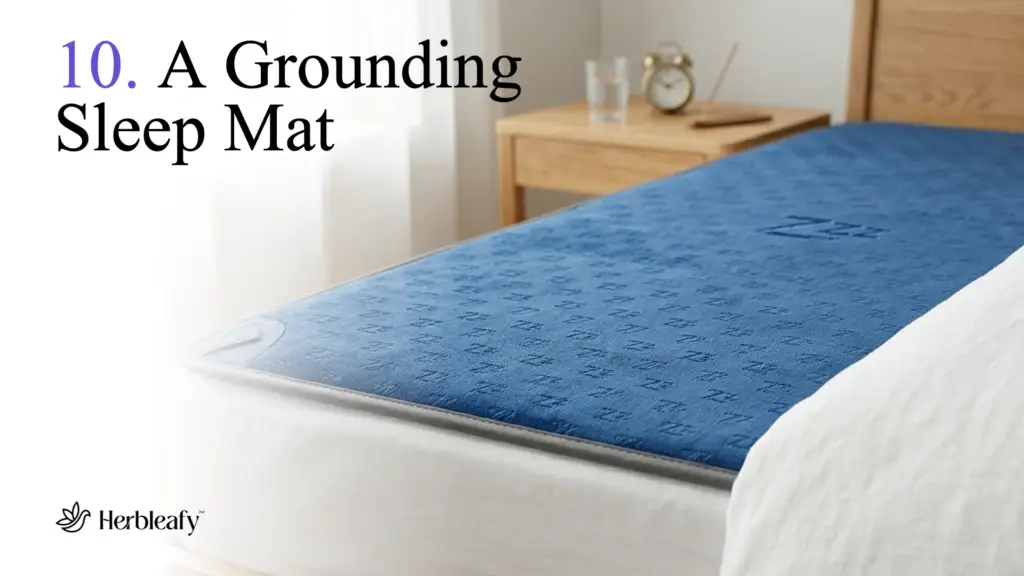
10. The Grounding Mat: Reconnecting with Earth’s Current
Modern life surrounds us with electromagnetic frequencies (EMFs) from Wi-Fi routers, smartphones, and household appliances.
While these tools offer undeniable convenience, constant exposure to these electronic signals can contribute to an elevated state of nervous system arousal.
If you feel a lingering sense of tension after a day of screen time, it may be more than just mental fatigue; your body can maintain a subtle electrical potential that keeps your internal systems in a state of high alert.
To understand how to sleep better, it is helpful to explore how discharging this cumulative environmental stress can lead to deeper physical relaxation.
How a Grounding Mat Actually Works
A grounding mat acts as a conduit between your body and the Earth’s natural electrical charge.
These mats are engineered with conductive materials—typically carbon or silver—that allow for the transfer of electrons. The process is mechanical rather than mystical:
The Connection: The mat is placed on your bed and connected via a specialized cord to the grounding port of a standard electrical outlet.
The Earth Link: This port bypasses the home’s active electricity and connects directly to a grounding rod buried in the earth outside.
The Discharge: When you make physical contact with the mat, your body’s electrical potential equalizes with the Earth’s. This allows any built-up static or “noise” from your environment to be safely discharged, effectively “earthing” your physiology while you rest.
Why This Assists Sleep
The primary benefit of grounding lies in its ability to help regulate the endocrine system, specifically the production of cortisol.
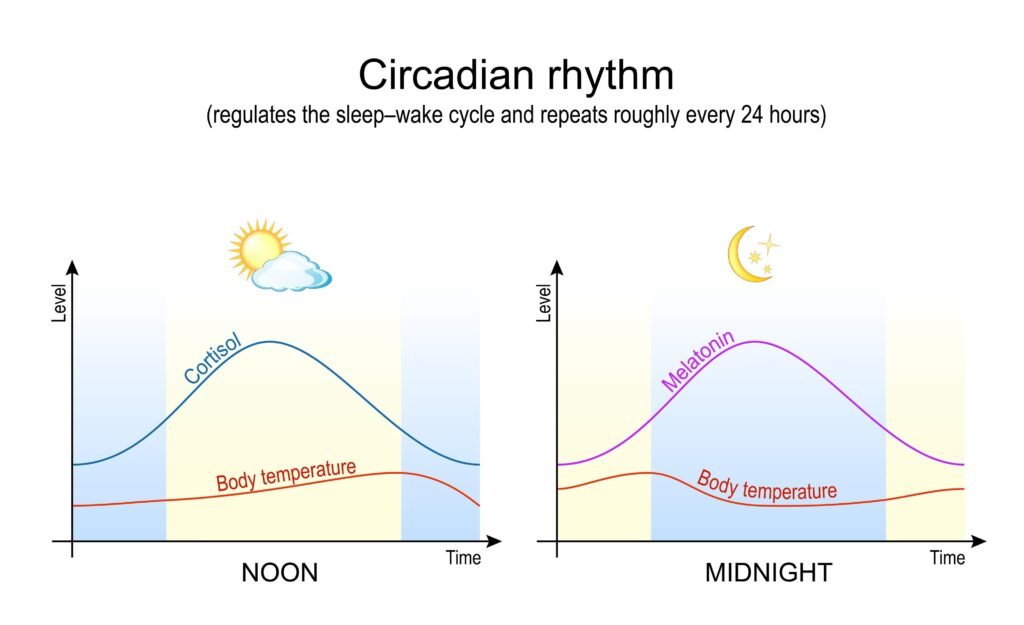
Cortisol is your body’s primary stress hormone; it should be high in the morning to wake you up and low at night to allow for sleep.
Clinical observations have shown that grounding during sleep can help normalize these cortisol rhythms.
By reducing the “environmental noise” that keeps the nervous system stimulated, grounding encourages the body to shift from a sympathetic (fight-or-flight) state into a parasympathetic (rest-and-digest) state.
This transition is essential for anyone investigating how to sleep better, as it lowers the physiological barriers to entering deep, restorative sleep cycles.
The Verdict: While grounding isn’t a potent sedative, it serves as an excellent foundational tool.
It works by removing the subtle “electrical background noise” of modern life, creating a neutral biological environment that makes your other sleep efforts more effective.
Snore Score: 6/10
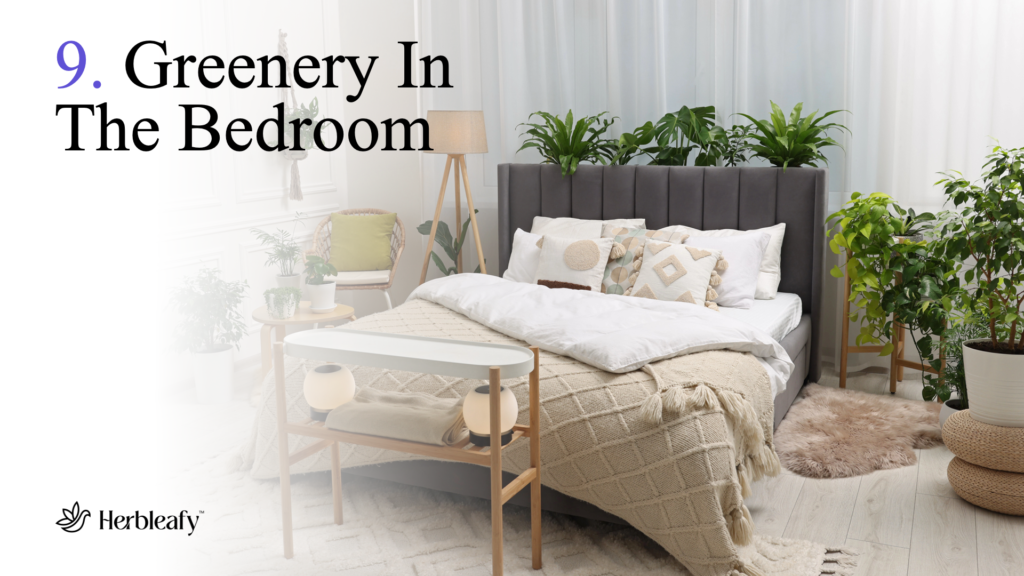
9. Bring the Outdoors In: The Functional Benefits of Bedroom Greenery
When investigating how to sleep better, most people focus on their mattress or their phone usage, but they often overlook the actual air they are breathing for eight hours a night.
Incorporating specific plants into your “Sleep Den” is more than an aesthetic choice; it is a functional intervention designed to improve air quality and lower physiological stress.
The Science of Nighttime Oxygen Production
Most plants undergo photosynthesis during the day, absorbing carbon dioxide and releasing oxygen, but they reverse this process at night.
However, certain “resilient” species—such as the Snake Plant (Sansevieria) and Aloe Vera—utilize Crassulacean Acid Metabolism (CAM).
These plants are unique because they keep their stomata closed during the day to prevent water loss and open them at night to take in CO2.
As a result, they release fresh oxygen while you sleep. Increasing the oxygen concentration in your immediate sleeping environment helps your body maintain optimal blood-oxygen levels with less respiratory effort, which is a key component in learning how to sleep better.
Filtering Volatile Organic Compounds (VOCs) The air inside a modern home is often trapped, leading to a buildup of Volatile Organic Compounds (VOCs) emitted by synthetic carpets, furniture glues, and paint.
A landmark NASA study demonstrated that certain houseplants can act as biological filters, scrubbing the air of toxins like:
Formaldehyde: Found in many household cleaning products and pressed-wood furniture.
Benzene: A common solvent found in oils and paints.
Trichloroethylene: Used in some fabric cleaners and adhesives.
By reducing these microscopic irritants, you decrease the inflammatory load on your respiratory system.
This ensures that your body can focus on deep-stage recovery rather than fighting off low-level environmental triggers.
The Biophilic Effect on the Nervous System Beyond air chemistry, there is a psychological mechanism known as biophilia—the innate human tendency to seek connections with nature.
Clinical research has shown that the presence of natural elements in a room can lower heart rate and reduce blood pressure.
By placing greenery in your field of vision before you close your eyes, you provide a visual “off-switch” for your sympathetic nervous system, signaling that your environment is a safe, restorative space.
The Verdict: While plants won’t provide a sedative effect, they optimize the “respiratory environment.”
Cleaner air and higher oxygen levels reduce the metabolic “tax” on your body during rest, making this a vital secondary layer for long-term sleep health.
And from a psychology point of view, plants do give off a relaxing vibe and can help transform the way your see your bedroom, and how benefitial sleep is for you – over staying up for ‘one more episode’.
Snore Score: 6/10
8. Inhaling Peace: The Neurochemical Power of a “Sleep Scent”
When people research how to sleep better, they often prioritize what they see or feel, yet the sense of smell has the most direct path to the brain’s emotional and physiological control centers.
Unlike other senses that must be processed through the thalamus, scent molecules travel directly to the olfactory bulb, which is physically connected to the amygdala and hippocampus.
This unique anatomy allows specific scents to trigger immediate changes in your nervous system.
The Chemistry of Linalool and Cedrol
To utilize scent as a functional sleep tool rather than a mere “room freshener,” you must look at the active chemical compounds within essential oils.
Lavender (Linalool): Lavender is the most clinically studied sleep scent.
Research indicates that inhaling linalool—the primary terpene in lavender—interacts with the GABA neurotransmitter system in the brain. GABA is essentially your “inhibitory” neurotransmitter that quiets the central nervous system.
Cedarwood (Cedrol): Cedarwood contains cedrol, which has been shown in clinical trials to reduce heart rate and blood pressure by increasing parasympathetic (restful) activity.
By consistently introducing these scents into your Sleep Den via a diffuser or a light pillow mist, you are not just making the room smell pleasant; you are utilizing chemical signaling to lower your physiological arousal levels.
Pavlovian Sleep Conditioning Beyond the immediate chemical effects, scent is a powerful tool for how to sleep better through Pavlovian conditioning.
Your brain is highly efficient at forming associations.
If you only expose yourself to a specific scent (like a blend of cedarwood and bergamot) during your wind-down routine, your brain eventually begins to associate that smell with the onset of sleep.
Over time, the mere presence of that aroma can trigger the “pre-sleep” phase, helping to bypass the mental chatter of the day.
This creates a psychological “shortcut” to relaxation, reducing the time it takes to transition from being awake to entering the first stage of light sleep.
The Verdict: While scent is not a “knock-out” agent, it is one of the most effective ways to shift your nervous system from high-alert to a state of calm.
It acts as a reliable biological signal that the day is over, making it an essential component of a high-performance night routine.
Snore Score: 7/10
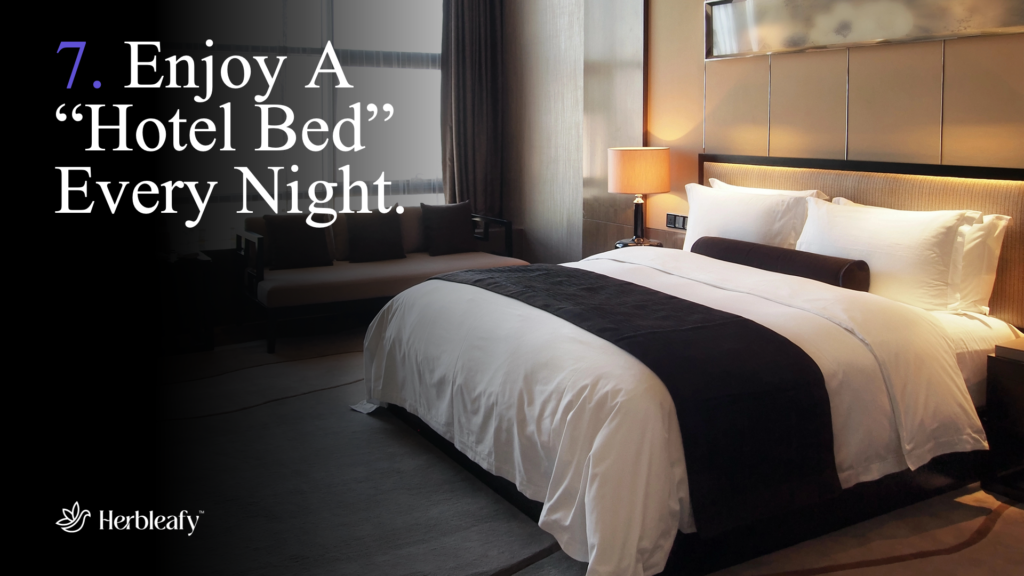
7. The “Hotel” Bedding Strategy: Eliminating Motion and Temperature Friction
When couples ask how to sleep better, the conversation often turns to the quality of the mattress, but the actual logistics of sharing a bed are frequently the culprit behind poor rest.
In Northern Europe, specifically Scandinavia, a common practice known as the “Two-Duvet Method” is used to solve two of the most common sleep disruptors: motion transfer and “thermoculprit” friction (when one partner is too hot and the other is too cold).
Minimizing Motion Transfer and Micro-Awakenings
Every time your partner tosses, turns, or gets up in the middle of the night, your body experiences what sleep scientists call a “micro-awakening.”
You might not fully wake up, but your brain shifts from a deep, restorative stage of sleep into a lighter stage.
Over time, these disruptions prevent you from completing full sleep cycles, leading to daytime fatigue.
Using separate duvets or, in more advanced setups, split mattresses, physically decouples you from your partner’s movements.
This ensures that their restlessness doesn’t become your sleep deprivation. By creating a physical boundary, you preserve the integrity of your deep sleep stages.
The Science of Individual Thermoregulation Biologically, everyone has a slightly different “thermal neutral zone.”
Some people are “hot sleepers” who need minimal insulation to allow their core temperature to drop, while others require more heat to feel comfortable.
When sharing a single duvet, one person is almost always compromising their ideal temperature, which is a major hurdle for anyone trying to figure out how to sleep better.
The “Hotel Strategy” allows each person to customize their micro-climate.
Using a duvet with a TOG (Thermal Overall Grade) rating suited to your specific metabolic needs ensures that your body doesn’t have to waste energy sweating or shivering.
When your body doesn’t have to fight to maintain its temperature, it can allocate those resources to cellular repair and memory consolidation.
The Verdict: This is a high-impact logistical change.
By removing the physical and thermal friction of sharing a bed, you significantly reduce the number of times your sleep is interrupted throughout the night.
It is a practical, evidence-based adjustment for significantly better sleep quality.
Snore Score: 8/10
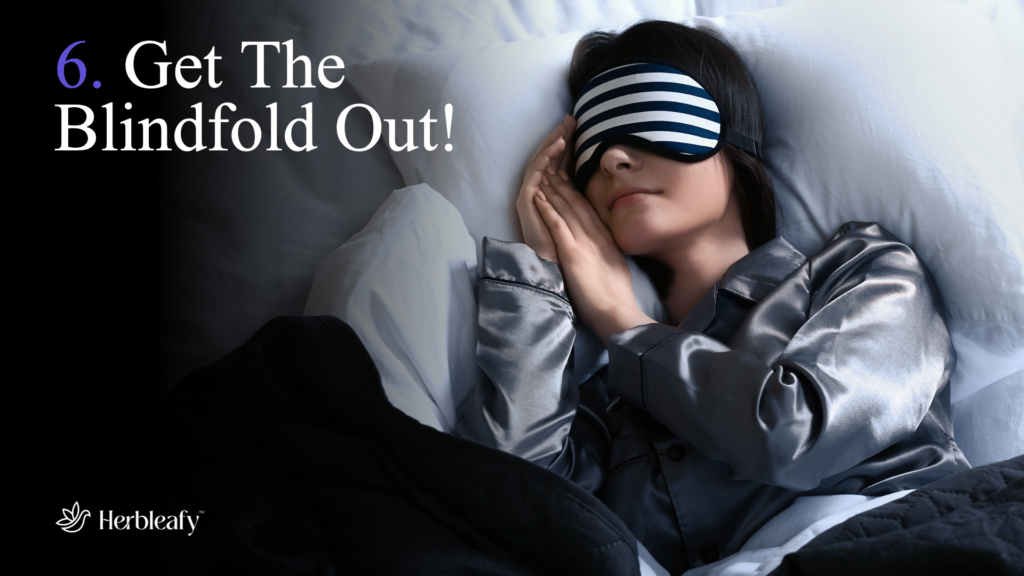
6. Sensory Deprivation: Creating a Portable “Sleep Den”
When you are exploring how to sleep better, you quickly realize that your brain is hardwired to scan for threats even while you are unconscious.
Evolutionarily, we are designed to wake up at the sound of a snapping twig or a sudden change in light.
In our modern world, that “snapping twig” is a neighbor’s car door, and the “sudden light” is the glow of a passing streetlight.
Sensory deprivation through earplugs and blindfolds allows you to manually override these ancient survival mechanisms.
The Impact of Sound Spikes on Sleep Architecture
It isn’t just “loud” noises that ruin your rest; it’s the change in sound levels.
Sleep researchers focus on “peak noise events”—sudden sounds that spike above the ambient background noise.
These spikes trigger a startle response in the brain, causing a burst of alpha-wave activity.
Even if you don’t remember waking up, these spikes pull you out of deep, slow-wave sleep and into lighter stages.
Using high-quality silicone or filtered earplugs raises your “noise floor,” meaning your brain is far less likely to register these disruptive environmental sounds.
By stabilizing your acoustic environment, you ensure your sleep cycles remain uninterrupted from start to finish.
Melatonin Protection via Light Blockage Your eyes can actually detect light through your eyelids.
When photoreceptors in the retina sense even a small amount of light, they send a signal to the suprachiasmatic nucleus (SCN) to suppress the production of melatonin.
This is why many people who want to know how to sleep better struggle during the summer months when the sun rises early.
A total-blockout sleep mask—specifically a contoured weighted mask—does two things:
Total Darkness: It ensures zero light leakage, protecting your melatonin production regardless of your curtains or the time of day.
Deep Pressure Stimulation: Weighted masks provide a subtle pressure around the ocular orbit, which can stimulate the vagus nerve and encourage a lower heart rate, further nudging your nervous system into a restful state.
The Verdict: Blindfolds and ear plugs, and other sensory deprivation tools are among the most effective “low-tech” (and cost) solutions available.
They provide a reliable way to maintain a consistent sleep environment, making them indispensable for anyone serious about mastering how to sleep better in an unpredictable world.
Snore Score: 8/10
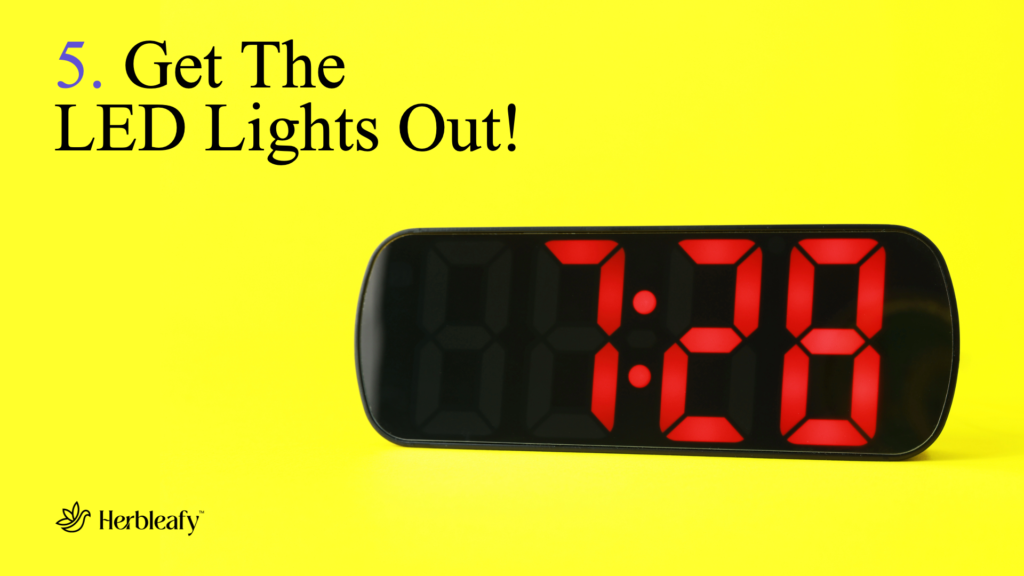
5. Kill the LEDs: Banish the “Melatonin Assassins”
When you are investigating how to sleep better, you will find that the human eye is incredibly sensitive to even the smallest “pinprick” of light.
In a natural environment, the only light source at night would be the moon or stars, which emit very low-intensity light.
Today, however, our bedrooms are filled with glowing red, blue, and green standby lights from TVs, chargers, and digital alarm clocks.
These are the “melatonin assassins” of the modern era.
The Problem with Short-Wavelength Light The issue isn’t just that these lights are annoying; it is the specific wavelength they emit.
Most LED indicators are blue or white-biased.
Blue light, specifically in the 450–490 nanometer range, is the primary signal to the brain that the sun is up.
When your retina detects even a tiny amount of this light during the night, it sends a message to the pineal gland to halt the secretion of melatonin.
This creates a state of “circadian confusion.” Your body wants to sleep, but your brain thinks it is dawn.
By removing these lights, you prevent this constant chemical interruption, allowing your melatonin levels to peak naturally and stay high throughout the night.
How to Audit Your Sleep Den
To effectively execute this step and learn how to sleep better, you must perform a “Blackout Audit”:
The Tape Trick: Use small pieces of black electrical tape to cover the standby lights on your television, air conditioner, or power strips.
The Analog Swap: Replace digital LED alarm clocks with dimmable analog versions or, better yet, clocks that use warm, red light.
Red light has a much higher wavelength and does not suppress melatonin in the same way blue light does.
Device Banishment: Ensure no smartphones or tablets are charging with their screens facing up or blinking with notifications.
By creating an environment of “absolute zero” light, you allow your brain to enter the deepest stages of sleep without the fear of a sudden biological “reset” triggered by a stray LED.
The Verdict: This is one of the most effective “free” hacks available.
By simply eliminating tiny light sources, you protect your body’s natural sleep chemistry.
It is a non-negotiable step for anyone looking to maximize their recovery and morning alertness.
Snore Score: 9/10
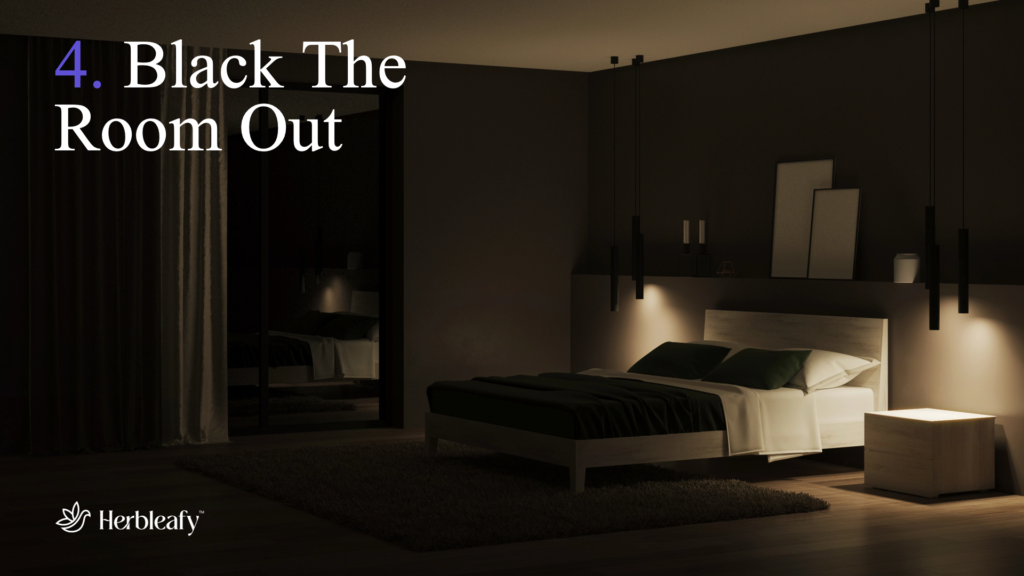
4. The Total Blackout: Environmental Light Control
If you want to master how to sleep better, you must understand that your skin and eyes are constantly communicating with your brain about the time of day.
While “killing the LEDs” handles the internal light sources, the Total Blackout strategy focuses on external light pollution.
Streetlights, passing cars, and even a bright full moon can provide enough lux (the measurement of light intensity) to disrupt your sleep architecture.
The Biology of the Darkened Room Human biology evolved in a world where “night” meant near-total darkness.
Our internal clock, or circadian rhythm, relies on this darkness to initiate the transition from light sleep to deep, slow-wave sleep.
When light leaks into your bedroom, it creates a “low-level alert” state in the brain.
Even if you are asleep, your brain continues to process this light information.
This can lead to fragmented sleep, where you technically “sleep” for eight hours but wake up feeling unrefreshed because you never reached the necessary depth of recovery.
True restorative rest requires a “phototropic” environment—one where the absence of light is absolute.
Implementing the Blackout Strategy
To achieve a professional-grade Sleep Den, you should consider the following hardware upgrades:
Blackout Curtains: Look for curtains with a dedicated “blackout lining.” These are heavy-duty and designed to absorb light rather than just reflecting it.
Side Channels: Often, light leaks through the gaps at the top and sides of the curtain rod. Installing “side channels” or wrap-around rods ensures that 100% of the window surface is sealed.
The Towel Hack: If light is creeping in from under the bedroom door, a simple draft stopper or a rolled-up towel can eliminate that final sliver of hallway light.
By sealing your room off from the outside world, you create a controlled environment that mimics a deep cave—the ideal setting for the human body to perform its nightly maintenance.
The Verdict: This is a foundation-level requirement for anyone serious about performance.
Removing environmental light is one of the fastest ways to improve “sleep efficiency” (the ratio of time spent asleep versus time spent in bed).
It is a critical component of learning how to sleep better.
Snore Score: 9/10
3. The Hot Shower Paradox: The Matt Walker Cooling Hack
One of the most profound discoveries in sleep science, popularized by neuroscientist Dr. Matt Walker, is the relationship between body temperature and sleep onset.
Many people believe that a hot bath or shower helps you sleep because the warmth is “soothing.”
While the relaxation is a benefit, the real magic is actually a biological paradox: you use heat to get cold.
The Science of Vasodilation
When you step into a hot shower or bath about 60 to 90 minutes before bed, your body undergoes a process called vasodilation.
The heat causes your blood vessels to open up, specifically the ones in your hands and feet.
This process brings your warm, internal blood to the surface of your skin.
Once you step out of the shower, that heat rapidly escapes into the cooler air of your home. This causes your core body temperature to plummet.
This rapid drop in internal temperature is a massive biological signal to the brain that it is time to sleep.
In fact, your brain needs to drop its core temperature by about 1°C to initiate sleep.
By taking a hot shower, you are effectively “dumping” heat and tricking your brain into starting the sleep process earlier.
Optimizing the “Dump” If you want to use this trick to figure out how to sleep better, timing is everything.
If you shower immediately before hitting the pillow, you might still be too warm, which can keep you awake.
The Sweet Spot: Aim for roughly one hour before bed.
The Extremity Strategy: Warming your hands and feet specifically (even with a foot bath or warm socks after the shower) keeps those blood vessels open, allowing your core to continue cooling down as you climb into bed.
By mastering this “thermal dump,” you bypass the hours of tossing and turning and tell your nervous system—in no uncertain terms—that the day is officially done.
The Verdict: This is a top-tier biological hack. It is evidence-based, free, and utilizes your body’s own temperature-regulation systems to force a state of sleepiness – making it a cornerstone of any optimized night routine.
Snore Score: 9/10
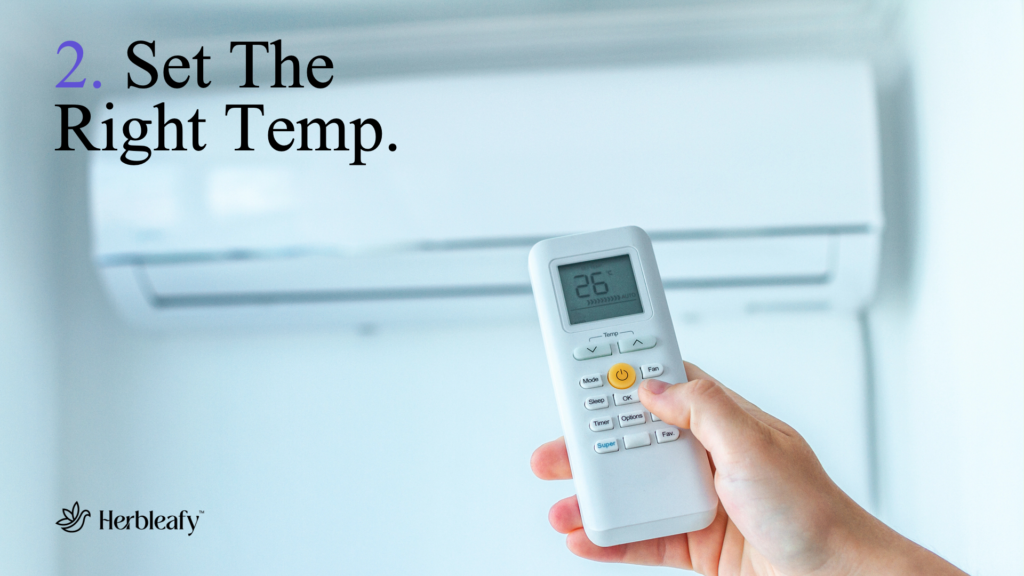
2. Keep it Cool: The 18°C Sleep Standard
Moving into our silver-medal position, we address the physical climate of your Sleep Den.
While the hot shower helps initiate sleep, maintaining the right room temperature ensures you stay asleep.
If you want to know how to sleep better, you must prioritize thermal regulation.
Most people keep their bedrooms far too warm, which is a leading cause of middle-of-the-night wake-ups.
As we established with the hot shower paradox, your brain and body need to drop their core temperature to enter and maintain deep sleep.
If the ambient air in your room is too high, your body becomes trapped in a “heat bottleneck,” unable to shed the necessary degrees to stay in restorative stages.
The Biological Sweet Spot Clinical research and the National Sleep Foundation have identified a specific temperature range that serves as the “biological sweet spot” for the human brain: 16°C to 19°C (60°F to 67°F), with 18°C (65°F) being the gold standard.
During a normal sleep cycle, your body temperature naturally dips to its lowest point around 4:00 AM.
If your room is set to 22°C (72°F) or higher, your body has to work harder—sweating and increasing heart rate—to reach that low point.
This metabolic work prevents you from reaching the “Slow Wave Sleep” (SWS) required for physical repair.
By keeping the room at 18°C, you are providing a “heat sink” that allows your body to effortlessly offload temperature.
Strategies for Thermal Success To master this pillar of how to sleep better, consider these adjustments:
The Thermostat Rule: Set your AC or heater to 18°C at least 30 minutes before you intend to sleep so the mattress and bedding are already cool.
Natural Fibers: Switch to linen or bamboo sheets, which are more breathable than synthetic polyesters and allow for better airflow.
The Foot Release: If you feel too warm, stick one foot out from under the covers.
The soles of your feet contain specialized vascular structures (AVAs) designed specifically for rapid heat dissipation.
By controlling your climate, you remove the physiological stress of overheating, allowing your brain to remain in the deep, “cool” states of recovery.
The Verdict: This is a high-utility, evidence-based intervention. It is almost impossible to achieve elite-level sleep in a warm room.
Lowering the thermostat is one of the most reliable ways to reduce “sleep fragmentation” and wake up feeling sharp.
Snore Score: 9/10
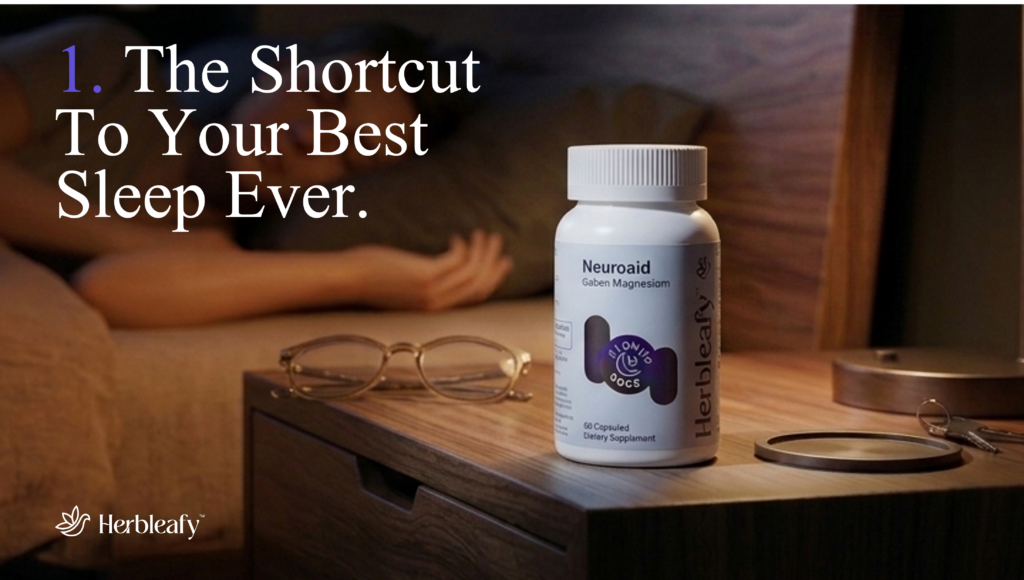
1. The Biochemical Master Switch: Neuroaid GABA + Magnesium
If you have optimized your Sleep Den’s light, temperature, and environment, you have laid the perfect foundation.
However, to truly master how to sleep better, you must address the internal chemical signals that govern the transition from wakefulness to deep recovery.
Neuroaid GABA + Magnesium is the “ultimate finisher” because it provides the brain with the precise raw materials needed to shut down the day’s stress and initiate the biological “rest and digest” response.
The Synergy of GABA and Magnesium Bisglycinate The core of this formula’s effectiveness lies in the relationship between GABA and Magnesium Bisglycinate.
GABA (Gamma-Aminobutyric Acid): This is your brain’s primary inhibitory neurotransmitter.
It acts as the “brakes” for your nervous system, slowing down the firing of neurons and quieting the mental “chatter” that often keeps us awake.
Magnesium Bisglycinate: Magnesium is a critical cofactor in over 300 enzymatic reactions, but its most important role for sleep is supporting GABAergic signaling.
By binding to GABA receptors, magnesium makes them more receptive to the calming effects of GABA, creating a compound effect that physically relaxes the muscles and the mind simultaneously.
The Role of Alpha-GPC and Black Cohosh Unlike standard “knock-out” pills, the Neuroaid formula includes sophisticated neuro-supportive ingredients that focus on balance rather than just sedation:
Alpha-GPC: While often used for focus, in a nighttime context, Alpha-GPC supports neurotransmitter balance.
It ensures that the brain’s communication pathways remain stable, preventing the “scattered” feeling of overstimulation and allowing for a smooth, cognitive transition into sleep.
Black Cohosh: Often utilized for its role in hormonal and nervous system equilibrium, Black Cohosh helps promote a calm, focused attention.
This prevents the physiological “spikes” in arousal that can occur during the night, especially for those managing fluctuating stress levels or hormonal shifts.
Why It Is the #1 Intervention
Most sleep aids rely on high doses of melatonin or sedatives that can leave you feeling “hungover” the next morning.
Neuroaid GABA + Magnesium works with your existing biology.
By taking 2 capsules roughly 30–60 minutes before bed, you aren’t just “turning off” your brain; you are providing the nutrients necessary for the parasympathetic nervous system to take over.
This ensures that you don’t just fall asleep—you stay in the deep, restorative sleep stages that lead to waking up feeling genuinely refreshed.
The Verdict: This is the most effective biological tool for anyone serious about sleep performance.
It bridges the gap between a “quiet room” and a “quiet mind,” making it the non-negotiable final step in learning how to sleep better.
Looking for home office productivity tips? I’d not be surprised as working from home offers unparalleled freedom, but it also demands an unprecedented level of
To learn how to beat the afternoon slump, you must optimize your cellular energy by supplementing mitochondrial nutrients like PQQ and CoQ10 with Alpha-GPC. This